
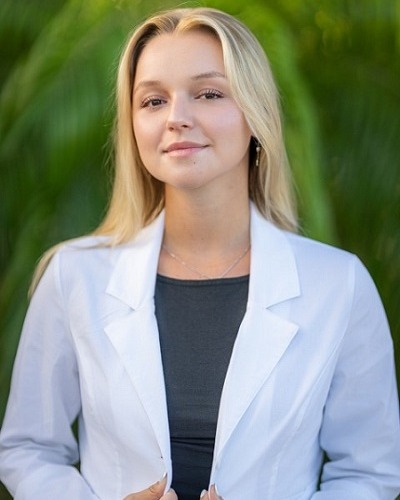
Medical Student
New York Institute of Technology College of Osteopathic Medicine, United States
Abstract:
Background: Aging skin and skin texture represent increasingly common dermatological concerns across age groups. Textural irregularities may arise from biological, mechanical, or environmental processes which degrade collagen and gradually contribute to more static, permanent wrinkles. In order to better understand the physiological processes driving these mechanisms and tailor treatment plans to address them, the severity of such texture must be assessed. However, objective quantification of skin surface roughness and topography has been a longstanding challenge in dermatologic research. Surface metrology is an objective measurement tool which can be utilized to achieve this goal by establishing a point-cloud that can be measured geometrically.
Methods: Samples of the left, right, and middle forehead were collected from 20 whole body donor cadavers at a single academic anatomy laboratory. Skin samples were scanned using the S Neox white light optical profiler and subsequently processed to eliminate impurities. Four surface roughness metrics were extracted per ISO-25178-2 standards, as well as wrinkle depth and volume. Statistical analysis was completed to assess textural differences both intra- and inter-donor.
Results:
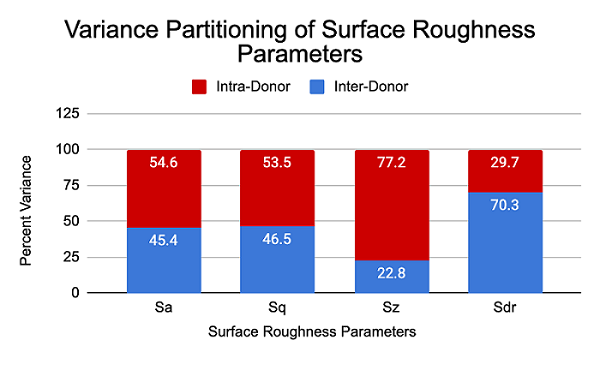
Figure 1: Percent contribution of intra- and inter- donor variance for each surface roughness parameter.
Substantial variability in surface roughness was observed within individual forehead specimens, indicating extreme topographical variance across aging skin. The magnitude and pattern of variability differed across roughness parameters, with height-based metrics (Sa, Sq, Sz) and surface complexity (Sdr) demonstrating distinct distributions and variance profiles.
Conclusion: Height-based averaging metrics such as Sa and Sq demonstrated both intra- and inter-donor variability, indicating that average surface roughness reflects contributions from localized remodeling as well as generalized aging-related texture changes. In contrast, approximately 77% of the variability in Sz arose from intra-donor differences, suggesting that extreme peak–valley features and localized wrinkle depth are heterogeneously distributed across different regions of the same forehead. Sdr exhibited greater inter-donor variability – about 70% – implying that overall surface complexity differs more substantially across individuals than within localized samples. Collectively, these findings indicate that aging forehead skin exhibits multiscale structural heterogeneity, with different roughness parameters capturing distinct aspects of microtopographic change. These findings highlight the importance of spatial sampling in quantitative skin aging studies, as single-point measurements may underestimate localized structural variation.
Biography:
Elizabeth N. Dotsenko is a second-year medical student at the New York Institute of Technology College of Osteopathic Medicine (NYITCOM). She graduated from Marist University in 2022 with a Bachelor of Science in Biomedical Sciences and a minor in Chemistry. At NYITCOM, she conducts dermatology-focused research in Dr. Beatty’s lab, where she studies skin and wrinkle morphology using three-dimensional microtopography and histologic analysis to better quantify wrinkle progression. She has a strong interest in dermatology research and plans to complete a dedicated research year following her second year to further advance her work in cutaneous aging research.
Copyright 2024 Mathews International LLC All Rights Reserved
